# Blog posts

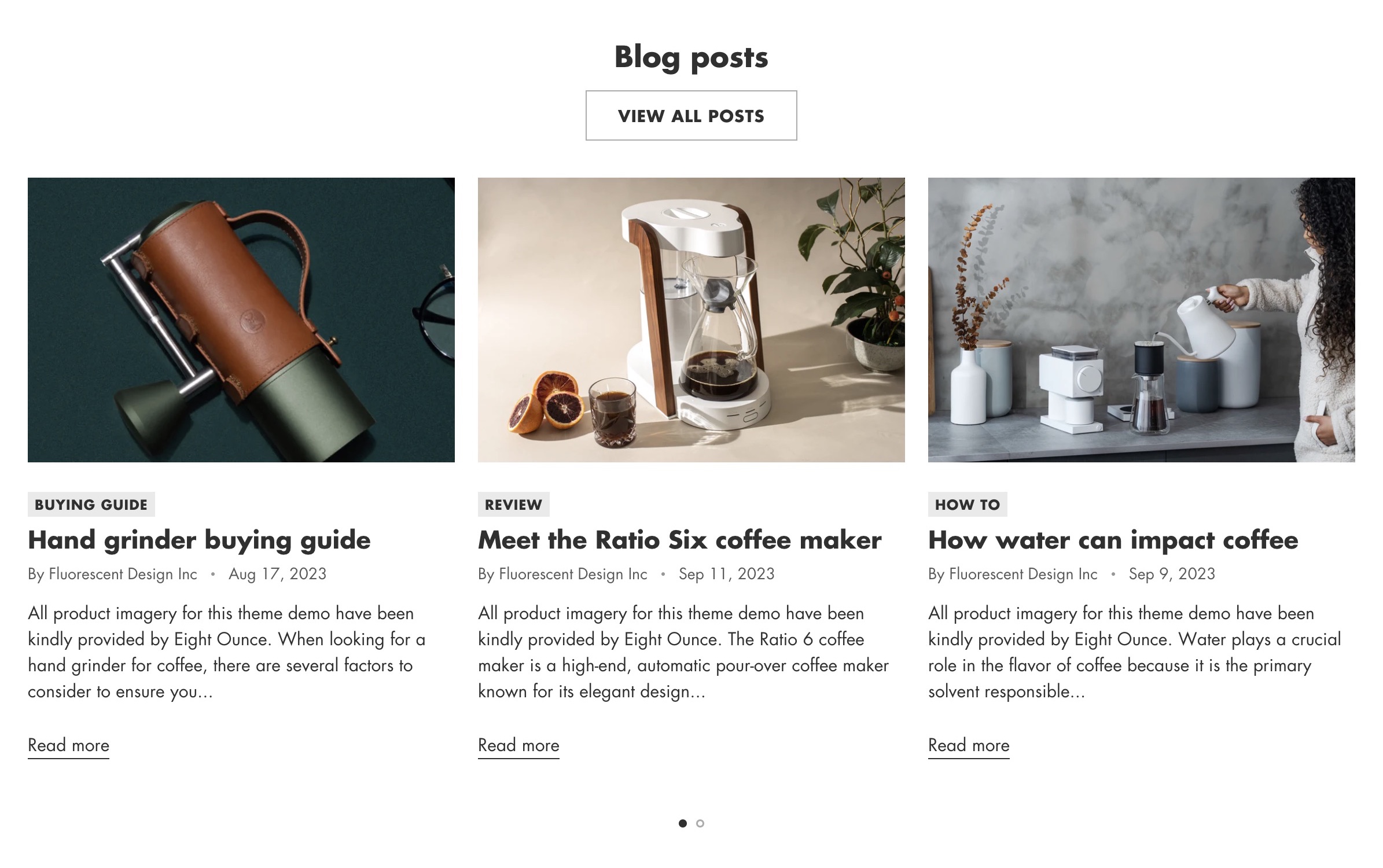
Use the **Blog posts** section to display your latest posts or selected posts from your blog. Blog posts appear as single-row slider that visitors can move through and click to read more.

{% hint style="info" %}
Check out Shopify's guide on [How to start a blog and grow your audience](https://www.shopify.com/blog/how-to-start-a-blog).
{% endhint %}

<figure><img src="/files/W3cqRFl97JoYN2xUsrd4" alt="" width="563"><figcaption></figcaption></figure>

{% hint style="warning" %}
**Editing templates will change all pages that use the same template**. [Create new templates](/cornerstone/general/editing-themes/using-templates.md#create-and-assign-multiple-templates) for different page layouts, or [show dynamic page content](/cornerstone/general/adapting-your-theme/dynamic-content-with-metafields.md) in the same template.
{% endhint %}

## Set up section

***

In the editor side panel, click **(+) Add section** and select **Blog posts**. Click and hold the drag handles **`⋮⋮`** to re-order sections.

### Section styles

Sections include general styles. Click the section to find options for **colors**, **spacing**, and **animations**.

<table data-view="cards"><thead><tr><th align="center"></th><th data-hidden data-card-target data-type="content-ref"></th></tr></thead><tbody><tr><td align="center"><mark style="color:blue;"><strong>Section colors</strong></mark></td><td><a href="/pages/CBsbGCpJAMAjEg83Oxwb#section-colors">/pages/CBsbGCpJAMAjEg83Oxwb#section-colors</a></td></tr><tr><td align="center"><mark style="color:blue;"><strong>Section spacing</strong></mark></td><td><a href="/pages/CBsbGCpJAMAjEg83Oxwb#section-padding">/pages/CBsbGCpJAMAjEg83Oxwb#section-padding</a></td></tr><tr><td align="center"><mark style="color:blue;"><strong>Section animations</strong></mark></td><td><a href="/pages/CBsbGCpJAMAjEg83Oxwb#section-animations">/pages/CBsbGCpJAMAjEg83Oxwb#section-animations</a></td></tr></tbody></table>

## Select blog posts to show

***

Display the latest posts from a **Selected blog** or create a **Custom list** of blog posts.

<details>

<summary><mark style="color:blue;"><strong>STEPS: Show latest posts</strong></mark></summary>

In your theme editor (**Customize**):

1. Click the **Blog posts** section to open the section settings.
2. Under **Blog post source**, make sure the **Selected blog** option is enabled.
3. Click **Select blog** to find the blog you want to feature.

   > Blogs are a Shopify feature. See their [Blogs help guide](https://help.shopify.com/en/manual/online-store/blogs/adding-a-blog) to learn more.
4. Use the **Number of articles** slider to set the maximum number of recent blog posts (between **`2`** and **`12`**).
5. Click **Save**.

</details>

<details>

<summary><mark style="color:blue;"><strong>STEPS: Show selected posts</strong></mark></summary>

In your theme editor (**Customize**):

1. Click the **Blog posts** section to open the section settings.
2. Under **Blog post source**, select **Custom list**.
3. In the section list panel, click **(+) Add Article** to add an article block.

   > Click **Remove block** or the eye icon to delete or hide a block.
4. Click **Select Article** to choose an article from the list.

   > After you have selected a blog post, you can follow the **Edit article** link if you need to add a blog image and excerpt.
5. (*Optional*.) Click and hold the drag handles **`⋮⋮`** to rearrange the posts:

   ![](/files/tOHF9cG7TWZSPV5YgAH3)

   > Click **Remove block** in the block settings to delete a block.

   > Click the **Eye icon** to hide or unhide a block.
6. Click **Save**.

</details>

{% hint style="info" %}
**Add post images and excerpts**

Make sure you've added blog posts with **featured images** in [**Online Store** > **Blog posts**](https://admin.shopify.com/articles)

You can also add **Excerpts** to change the text that appears under posts. By default, the first few lines will be used.
{% endhint %}

`Click Blog posts section to find settings`

<table><thead><tr><th width="186">Setting</th><th>Description</th></tr></thead><tbody><tr><td><mark style="color:blue;">Blog posts source</mark></td><td>Choose to display latest posts from a <strong>Selected blog</strong> or a <strong>Custom list</strong> of blog posts that you can add and re-order as blocks.</td></tr><tr><td><mark style="color:blue;">Add article</mark></td><td>For <strong>Custom list</strong>, click <strong>(+) Article</strong> beneath the Blog posts section.</td></tr><tr><td><mark style="color:blue;">Select blog</mark></td><td>For <strong>Selected blog</strong> source, click <strong>Change</strong> to select a blog to display its latest posts.</td></tr><tr><td><mark style="color:blue;">Number of articles</mark></td><td>For <strong>Selected blog</strong>, choose how many posts to display: between <strong>2</strong> and <strong>12</strong>.</td></tr><tr><td><mark style="color:blue;">Number of columns on desktop</mark></td><td>Select how many posts to show per row on desktop screens: either <strong>2</strong>, <strong>3</strong>, or <strong>4</strong> columns.<br><br><em>On mobile, the section displays one column</em>.</td></tr></tbody></table>

## Customize blog post cards

***

Change the visual style of the featured posts, including the **image aspect ratio, blog post details,** and **button.**

### Show blog post details

***

Choose which **blog post details to show,** as set up in your Shopify admin.

{% hint style="success" %}
To edit the post details, go to [**Online Store** > **Blog posts**](https://admin.shopify.com/articles)
{% endhint %}

`Click Blog posts section to find settings`

<table><thead><tr><th width="221">Setting</th><th>Description</th></tr></thead><tbody><tr><td><mark style="color:blue;">Show article categories</mark></td><td>Display tags that you've added to posts in the Shopify admin.</td></tr><tr><td><mark style="color:blue;">Show author</mark></td><td>Display the name of who created the blog post.</td></tr><tr><td><mark style="color:blue;">Show published date</mark></td><td>Display the date when the post was published.</td></tr><tr><td><mark style="color:blue;">Show excerpt</mark></td><td>When checked, the first few lines of the post will appear below.<br><br>You can add a custom excerpt to blog posts in your Shopify admin.</td></tr><tr><td><mark style="color:blue;">Show featured image</mark></td><td>Show the blog post image added in your Shopify admin.</td></tr></tbody></table>

### Change image shape

***

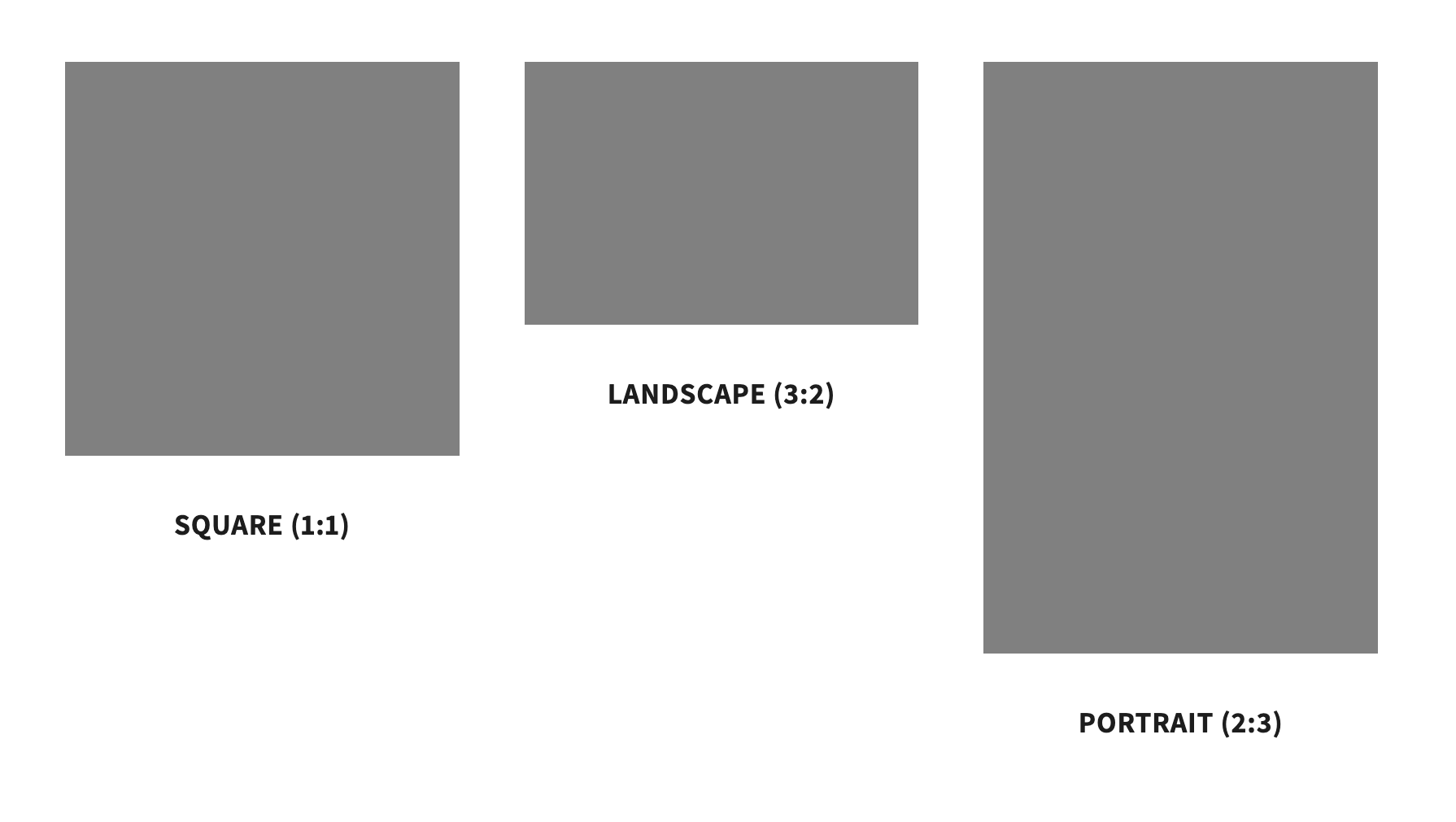
Change the **aspect ratio** to crop post images to be a uniform shape.

{% hint style="info" %}
The **aspect ratio** of an image is the proportion between its **w**idth and **h**eight (w:h). A square image has equal width and height (1:1); Portrait (2:1) is taller than it is wide.
{% endhint %}

<figure><img src="/files/7AsjidOO6migDlLE3fAb" alt="" width="375"><figcaption></figcaption></figure>

`Click Blog posts section to find settings`

<table><thead><tr><th width="140">Setting</th><th width="439">Description</th><th>Options</th></tr></thead><tbody><tr><td><mark style="color:blue;">Image aspect ratio</mark></td><td>Select an <strong>aspect ratio</strong> to crop images to be a uniform shape, or select <strong>Natural</strong> to display their original shape.</td><td><strong>Natural</strong><br><strong>Portrait (2:3)</strong><br><strong>Square (1:1)</strong><br><strong>Landscape (3:2)</strong></td></tr></tbody></table>

## Show text box

***

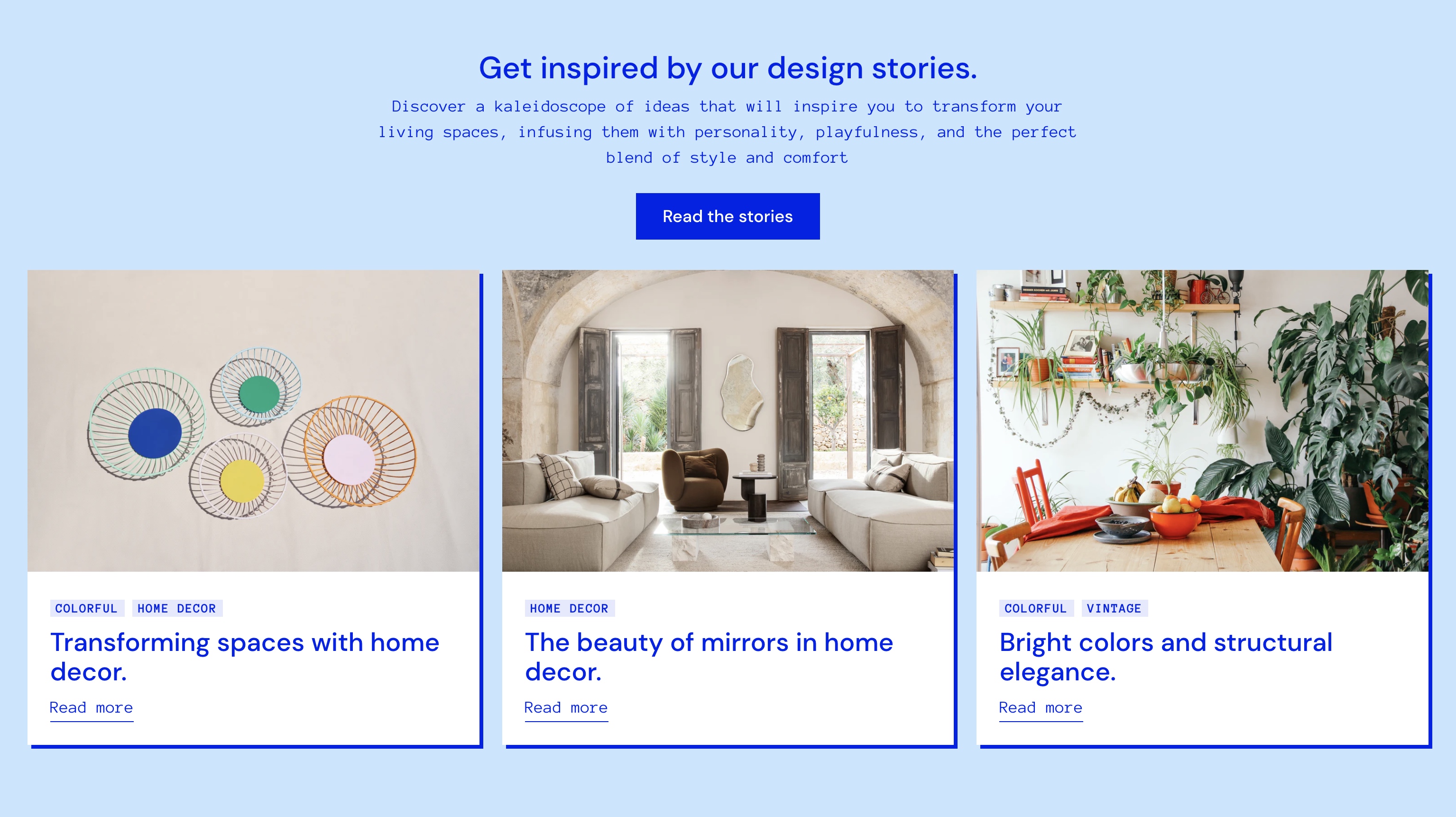
Choose to display the posts in container boxes with background colors. You can show tiles with **shadows** or **borders**.

<figure><img src="/files/VfztABAHRo5ScLGO5QWk" alt="" width="563"><figcaption></figcaption></figure>

`Click Blog posts section to find settings`

<table><thead><tr><th width="203">Setting</th><th>Description</th></tr></thead><tbody><tr><td><mark style="color:blue;">Show text box</mark></td><td>Display all posts within a container.</td></tr><tr><td><mark style="color:blue;">Text box style</mark></td><td>Display boxes with a <strong>Soft drop shadow</strong>, <strong>Solid drop shadow</strong>, or <strong>Borders</strong> with different thicknesses.</td></tr><tr><td><mark style="color:blue;">Color scheme</mark></td><td>Change the color scheme applied to the text box.<br><br>Use the <strong>Default</strong> color scheme from your theme settings or select a variant scheme based on the default: either <strong>Inverse</strong>, <strong>Soft</strong>, <strong>Accent</strong>, or <strong>Sale</strong>. You can also select a <strong>custom color scheme.</strong> <a href="/pages/7UqaWJHr530MKWscpEMp#color-schemes">Learn more</a>.</td></tr><tr><td><mark style="color:blue;">Override with custom colors</mark></td><td>Use custom colors for this section to override the color scheme.</td></tr><tr><td><mark style="color:blue;">Text color</mark></td><td>Select a custom color for text within the text box.</td></tr><tr><td><mark style="color:blue;">Background color</mark></td><td>Select a custom color for the background of text box.</td></tr></tbody></table>

## Section header

***

The **Section header** appears above the section. Add a **heading**, **subheading**, and optional **button**.

<details>

<summary><mark style="color:blue;"><strong>STEPS</strong></mark></summary>

In your theme editor (**Customize**):

1. Click the **Blog posts** section to open the section settings.
2. Enter **Accent** text to display a small label above the heading.
3. Enter **Heading** text to display a section title.
4. Enter **Subheading** text to display below the heading.

   > Use the formatting buttons to add text styles, links, or lists. To learn more, see Shopify's [Rich text editor guide](https://help.shopify.com/en/manual/shopify-admin/productivity-tools/rich-text-editor#format-text-with-the-rich-text-editor).
5. Select or paste a URL for the **Button Link**.
6. Change the **Button label** (e.g. "View all posts").

   > Leave this field blank to remove the button.

   > The most effective button labels ask customers to do something (e.g. Get started, Join us, Shop now). To learn more, [read "What is a Call to Action?"](https://www.thebalancesmb.com/call-to-action-1794380)
7. Click **Save**.

</details>

`Click Blog posts section to find settings`

<table><thead><tr><th width="202">Setting</th><th>Description</th></tr></thead><tbody><tr><td><mark style="color:blue;">Center header content</mark></td><td>Choose to display headings as center-aligned within section. Uncheck this option to align headings to the left.</td></tr><tr><td><mark style="color:blue;">Accent</mark></td><td>Add text to show a small heading above the main section heading.</td></tr><tr><td><mark style="color:blue;">Heading</mark></td><td>Add text to show a main heading above the section.</td></tr><tr><td><mark style="color:blue;">Subheading</mark></td><td>Add text to show a subheading below the main heading.</td></tr><tr><td><mark style="color:blue;">Maximum text width</mark></td><td>Set the maximum width of heading text between <strong>400</strong> and <strong>1000</strong> px.</td></tr><tr><td><mark style="color:blue;">Button link</mark></td><td>Select or paste a URL for a button. This link applies to the entire grid item if the button label field is blank.</td></tr><tr><td><mark style="color:blue;">Button label</mark></td><td>Enter text to display as the button label. The most effective button labels ask customers to do something (e.g. Join us, Shop now).</td></tr><tr><td><mark style="color:blue;">Button style</mark></td><td>Change the style of the button. Select Primary button (<strong>Solid</strong>), Secondary button (<strong>Solid</strong>), Tertiary button (<strong>Outline</strong>), or <strong>Text</strong>.</td></tr><tr><td><mark style="color:blue;">Buttons position</mark></td><td>Choose to show the buttons either in the <strong>Header</strong> (below the headings) or in the <strong>Footer</strong> (below the posts).<br><br><em>In the footer position, the button is always centered.</em></td></tr></tbody></table>

\\

***

> **Related links**
>
> [Blog posts template](/cornerstone/pages/templates/blog-posts-template.md)\
> [Blog page template](/cornerstone/pages/templates/blogs-page.md)


---

# Agent Instructions: Querying This Documentation

If you need additional information that is not directly available in this page, you can query the documentation dynamically by asking a question.

Perform an HTTP GET request on the current page URL with the `ask` query parameter:

```
GET https://help.fluorescent.co/cornerstone/pages/theme-sections/blog-posts.md?ask=<question>
```

The question should be specific, self-contained, and written in natural language.
The response will contain a direct answer to the question and relevant excerpts and sources from the documentation.

Use this mechanism when the answer is not explicitly present in the current page, you need clarification or additional context, or you want to retrieve related documentation sections.